The starting plan is 12 trekking days. Agree variations with your guide; travel and flight-buffer days are additional.
Everest region trek
Everest Base Camp
Plan the Everest Base Camp route with a licensed freelance guide through Sherpa Trails. Your guide organises the crew; accommodation, meals, transport, and permits are paid separately.
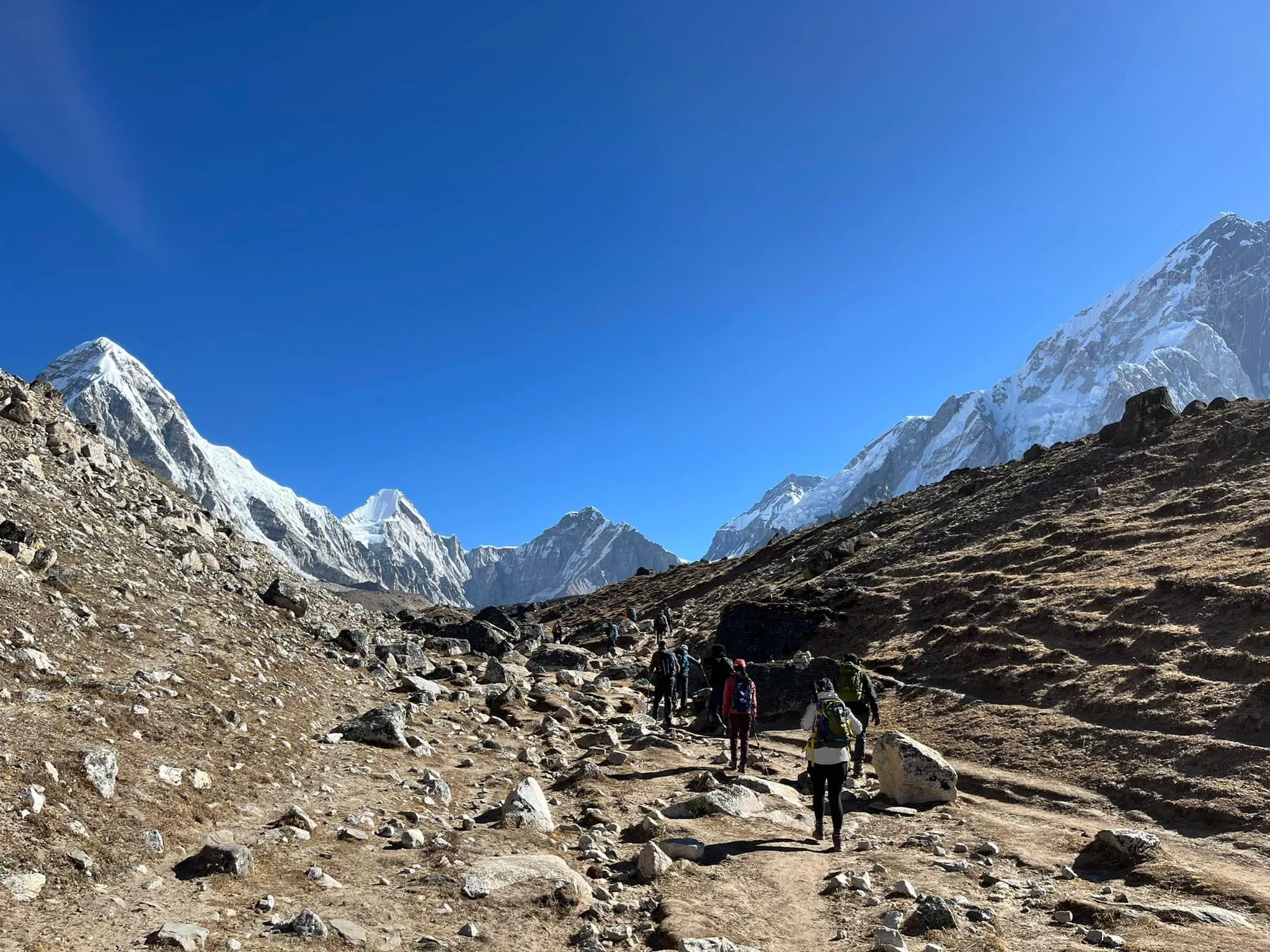
Your guide shares WhatsApp contact details after confirmation so you can agree the airport meeting arrangements before arrival.
Travellers should expect sustained walking days, thinner air, cold conditions, and basic mountain infrastructure.
Reaching either destination depends on health and conditions. Discuss Kala Patthar with your guide; it adds a demanding walking section.
The route
A clear starting point for a demanding trek.
The Everest Base Camp route is a high-altitude walking journey through forests, river valleys, villages, tea-house settlements, and open mountain terrain. The starting plan is 12 trekking days from Lukla, with 12–14 days recommended depending on acclimatisation and conditions. Agree variations with your guide and allow extra travel time around Lukla flights.
Sherpa Trails helps your group connect with a freelance guide and understand the crew-service cost. The lead guide agrees the itinerary with you, organises the crew and their insurance, and helps obtain the required permits. You pay for your own accommodation, meals, transport, permit fees, personal insurance, equipment, tips, and any treatment or evacuation.
Meet the local team
Meet your guide at Lukla Airport. Stay in touch through WhatsApp before arrival, particularly if your flight timing changes.
Move through changing terrain
The journey can pass through forested trails, suspension-bridge valleys, villages, high-altitude settlements, and broad rocky basins.
Use flexibility with care
A confirmed extra trekking day adds only the current daily crew-support price for the whole group—with no additional platform charge. Extensions still depend on safety, conditions, and team availability.
Keep pricing separate
The calculator prices the guide-and-porter arrangement only. Accommodation, food, transport, permits, and other traveller expenses are not part of that total.
Your crew & the cost
Your lead guide organises the crew.
Guide support
Your licensed freelance guide leads the trek, helps with pacing and teahouse communication, assists with permits, and coordinates support if someone becomes ill or injured. The guide may stop the ascent, change the route, recommend rest, or arrange descent for safety.
Porter support
The lead guide organises porters and an assistant guide where required. Agree luggage, group needs, duration, and crew arrangements directly with the guide before confirming the trek.
Preparation support
Sherpa Trails provides cost estimates and preparation information to help you begin the conversation. Your guide confirms the practical arrangements, including permits, meeting details, crew insurance, and on-trail support.
What the arrangement covers
- Guide, assistant guide where required, and selected porter support after availability is checked.
- Pre-trek communication about group size, route needs, and support expectations.
- Local guidance during the confirmed trekking days.
- Crew insurance arranged by the lead guide and shown in the calculator. There is currently no platform fee.
Traveller costs not included
- Traveller accommodation or tea-house stays.
- Traveller meals, drinks, or snacks.
- Visa fees, domestic flights and other airfare, ground transport, trekking permit fees, traveller insurance, tips, equipment, or personal expenses.
- Medical treatment, rescue transport, or helicopter evacuation.
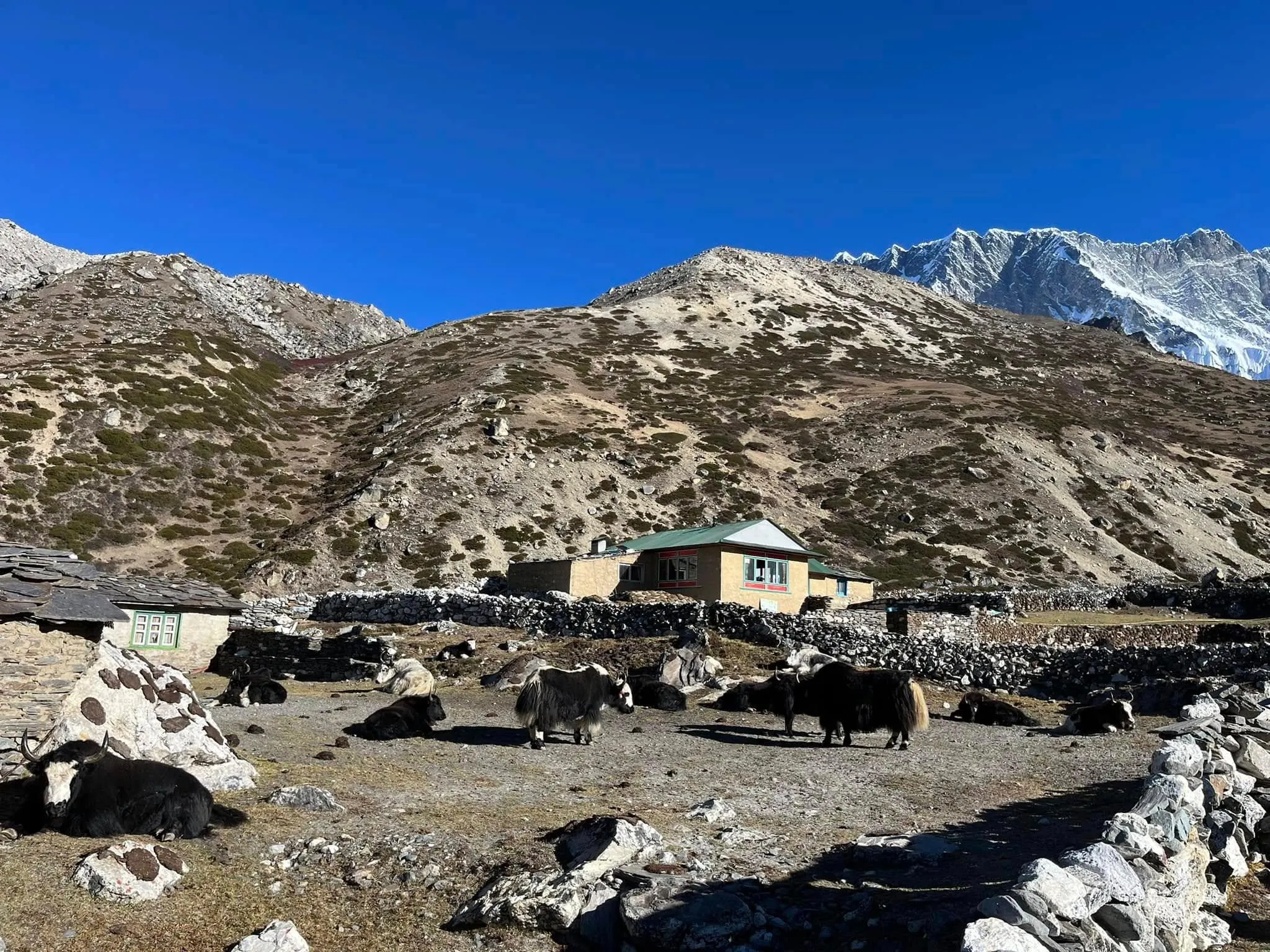
Life on the trail
More than the destination.
The trekking route passes through villages and tea-house settlements. Your guide helps with day-to-day coordination, but accommodation and food are paid separately by travellers.
Villages and tea houses
Tea-house life is part of the experience. Comforts are simple, availability can change, and expectations should stay practical.
Buddhist landmarks
Stupas, mani walls, monasteries, and prayer flags should be approached respectfully, with local guidance on etiquette when needed.
Local interpretation
A guide can help travellers understand the route as a lived region, not just a sequence of scenic viewpoints.
Before you go
Arrive ready for the walking days.
- Build fitness for repeated walking days rather than a single hard hike.
- Pack for layers, cold mornings, sun exposure, and changing weather.
- Plan buffer days around mountain weather and Lukla flight disruption.
- Carry appropriate insurance and understand what it covers before travel.
Permits and optional side trips
Your guide helps you obtain the entry documents required for the agreed route and explains what to bring. Permit fees are paid separately by travellers. Discuss Kala Patthar with your guide: the decision depends on your condition, available time, and weather, with a briefing before the planned visit.
Confirm that your personal insurance and the crew's cover extend to the full agreed route. Read our safety information for guide support, descent arrangements, and emergency costs.
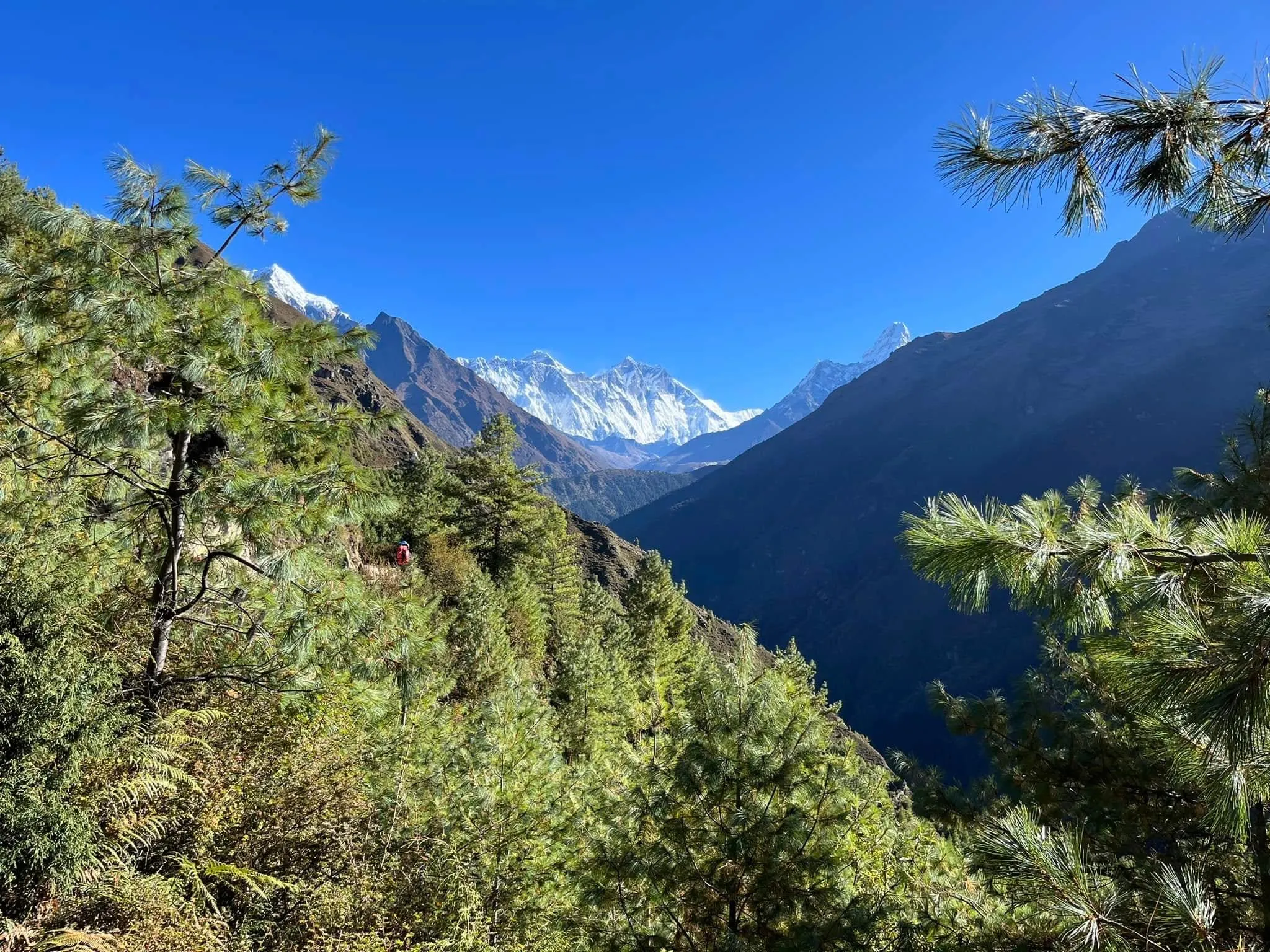
Lower trails can begin through forest before the higher terrain opens.
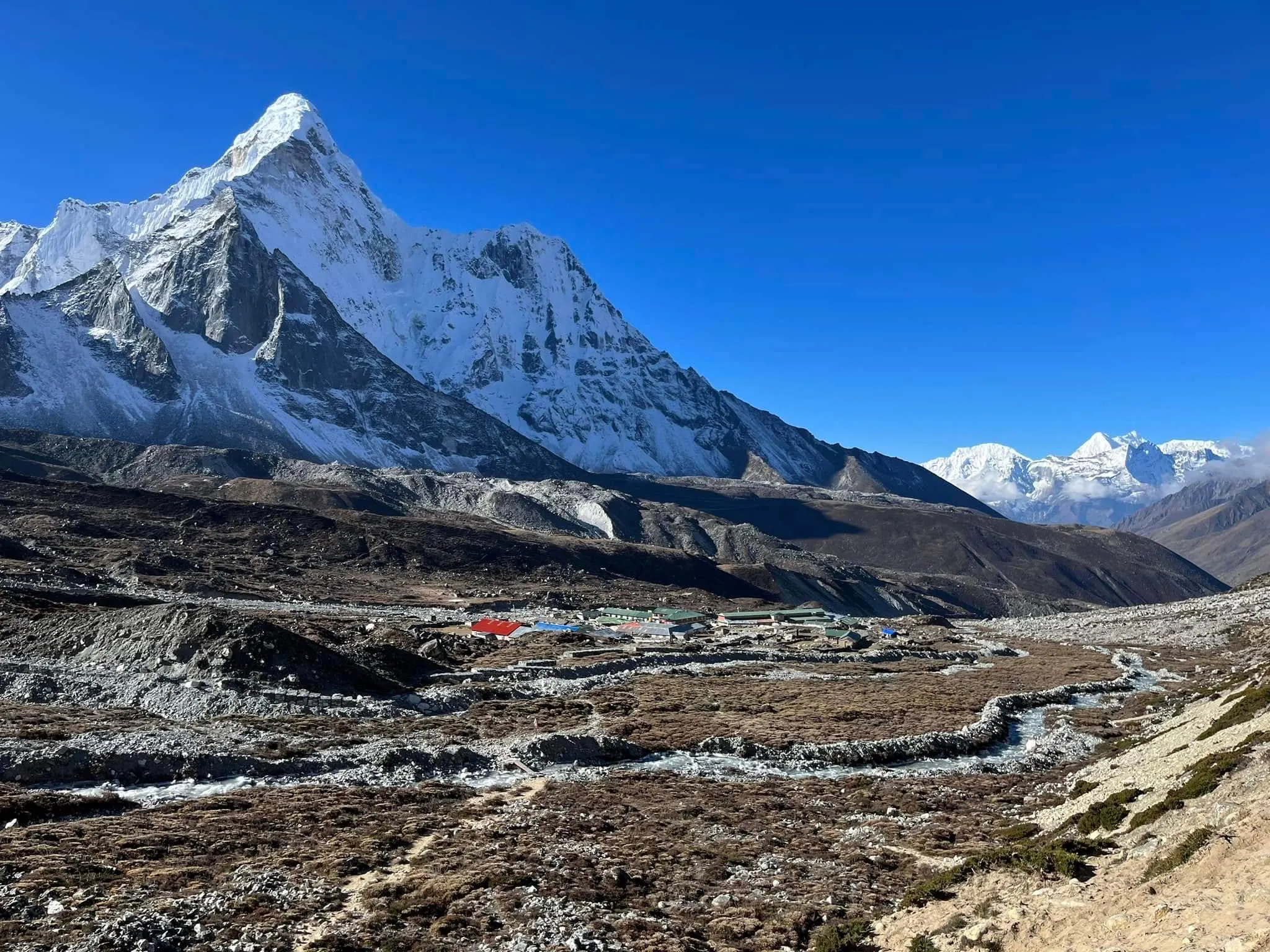
High-altitude settlements sit within a vast mountain landscape.
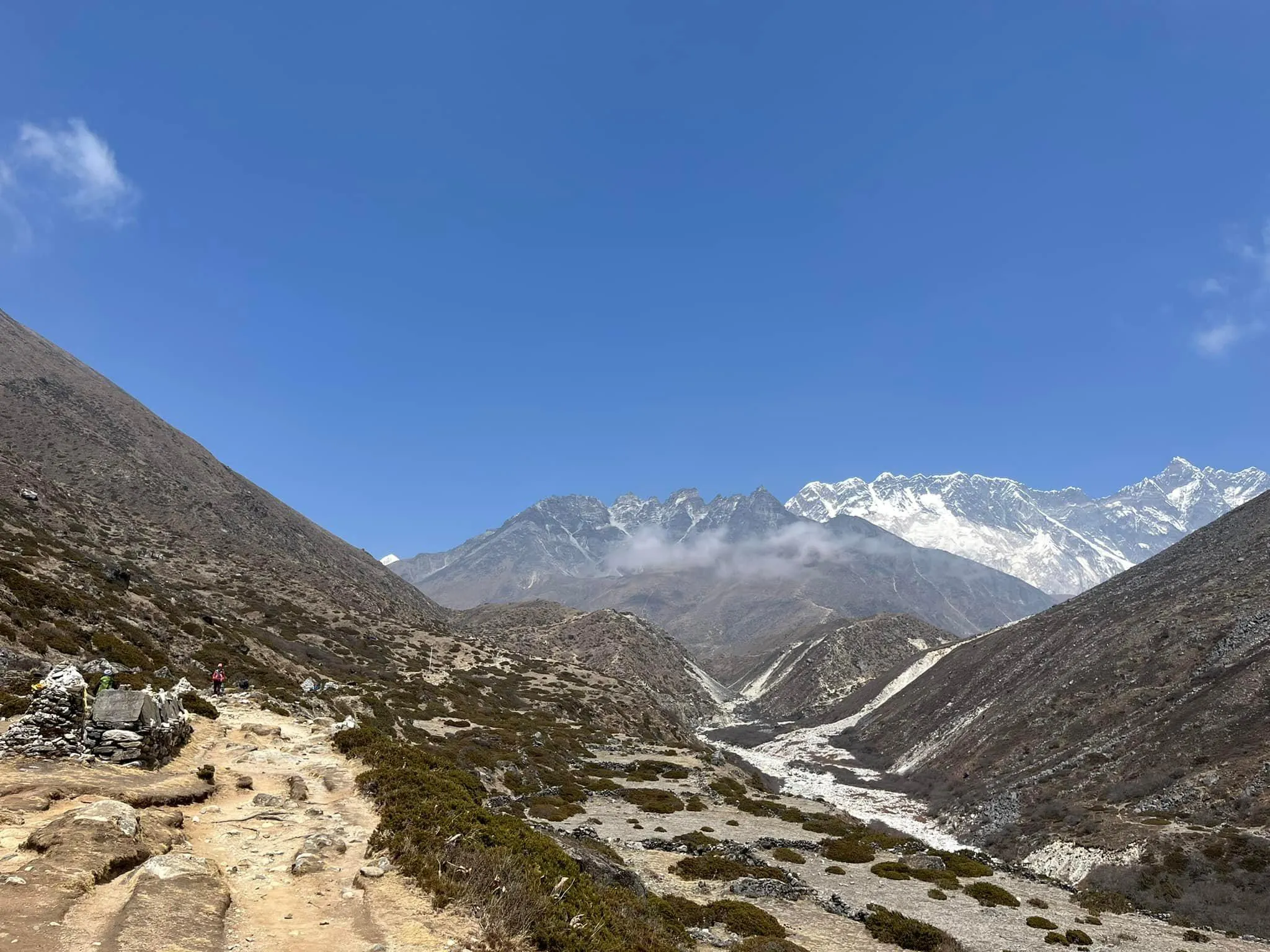
The later stages demand steady pacing and respect for altitude.
Start planning
Shape the trek around your group.
Build a transparent estimate for guide and porter support. Accommodation, food, transport, permits, and other traveller costs remain separate.